Emergency? Call 112 now. Dispatchers will guide you through these steps on the phone.
Most seizures stop on their own within a few minutes. Your job is to keep the person safe, time the seizure and know when it becomes an emergency.
During the seizure
- Stay calm and note the time it started.
- Protect them from injury. Move hard or sharp objects away. Cushion the head with something soft.
- Do not restrain their movements and never put anything in their mouth — people cannot swallow their tongue.
- Loosen anything tight around the neck and remove glasses.
After the jerking stops
- Roll them onto their side into the recovery position to keep the airway clear.
- Stay with them and speak reassuringly as they recover — confusion and tiredness are normal.
- Check for a medical ID bracelet or card, or a seizure action plan.
Call your emergency number if
- It is their first seizure, or you don't know their history.
- The seizure lasts more than 5 minutes, or seizures repeat without recovery between them.
- They are injured, pregnant, diabetic, or the seizure happened in water.
- Breathing is difficult or they don't regain consciousness.
Watch: What to do if someone has a seizure
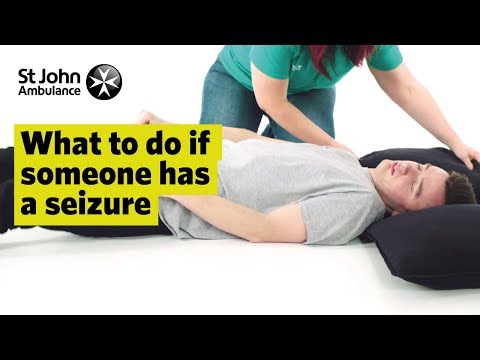
Video hosted on YouTube by its original publisher; embedded for education.
Last reviewed October 22, 2026 against current public guidance from national resuscitation councils and Red Cross / Red Crescent first-aid manuals. General education only — not a substitute for certified training or professional medical advice. Medical disclaimer · Suggest a correction